


Supreme Court Rules States Can Count Mail Ballots Received After Election Day – 5-4 Decision
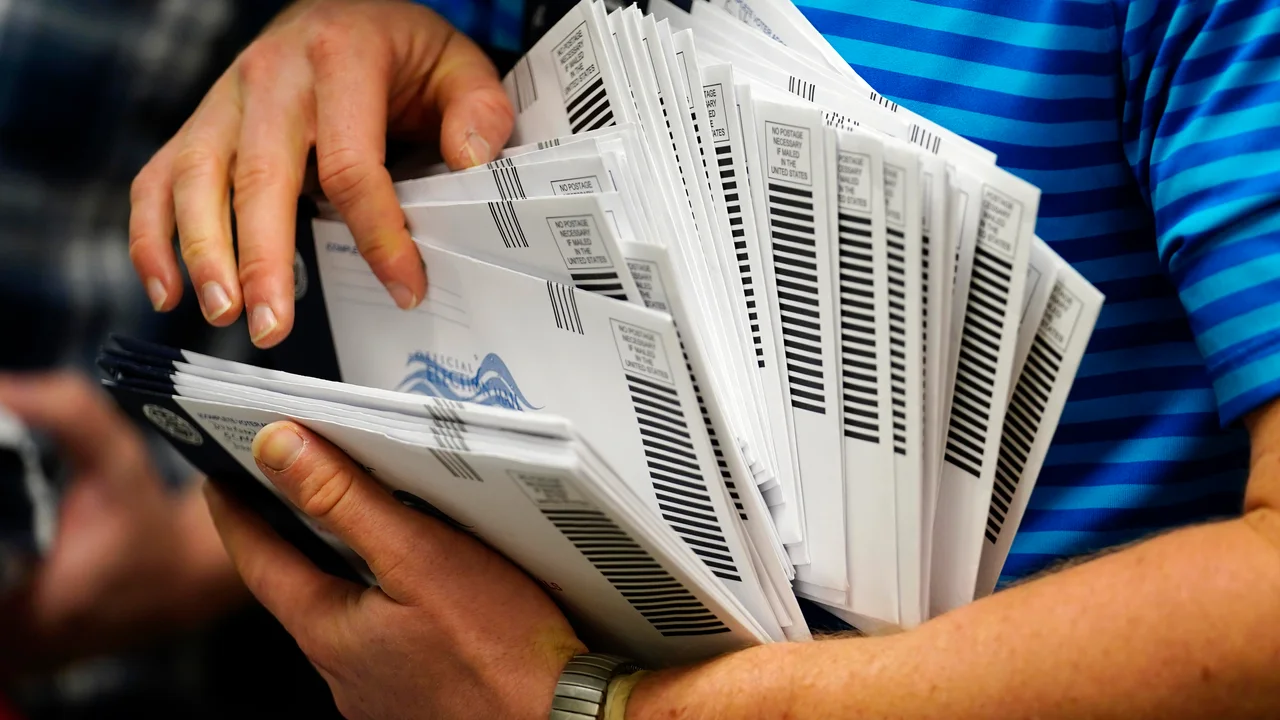
WASHINGTON – The U.S. Supreme Court ruled on Monday that states may count mail ballots that are cast by Election Day but arrive afterward, delivering a significant defeat to Republican efforts to restrict mail-in voting. In a closely watched 5-4 decision in Watson v. Republican National Committee, the high court upheld Mississippi's law allowing ballots postmarked by Election Day to be tallied up to five days later.
Justice Amy Coney Barrett authored the majority opinion, joined by Chief Justice John Roberts and the three liberal justices – Sonia Sotomayor, Elena Kagan, and Ketanji Brown Jackson. The ruling rejected arguments that federal statutes establishing a uniform Election Day preempt state laws with extended receipt deadlines.
"The election-day statutes say nothing about ballot receipt, and we cannot add to the words Congress chose," Barrett wrote. "The Framers recognized the difficulty of crafting election laws 'applicable to every probable change in the situation of the country.' So instead of constitutionalizing election law, they decided that 'a discretionary power over elections' needed to be lodged 'somewhere.' Suffice it to say, that power was not lodged in this Court."
The Legal Dispute
The case centered on Mississippi's five-day grace period for mail ballots postmarked by Election Day. The Republican National Committee and Mississippi's Libertarian Party had challenged the law, arguing that federal statutes enacted in the 1800s, which set a uniform day for presidential and congressional elections, require ballots to be received by that day. They contended that Mississippi's extended deadline conflicted with federal law.
A U.S. district court initially upheld Mississippi's law, but the U.S. Court of Appeals for the 5th Circuit reversed that decision, finding that federal law preempted the state's measure. Monday's Supreme Court ruling reversed the 5th Circuit's decision, restoring Mississippi's five-day grace period.
Barrett's Rationale: States Retain Authority Over Ballot Receipt
Barrett's majority opinion drew a clear distinction between the act of voting and the receipt of ballots. Federal election laws, she explained, require voters to cast their choice on Election Day – a requirement Mississippi satisfies. However, the same statutes do not establish a deadline for when ballots must be received.
"But the election-day statutes do not set a deadline for ballot receipt, so they do not prevent Mississippi from counting ballots postmarked before election day yet received afterward," Barrett wrote.
The opinion emphasized that the Constitution did not vest the judiciary with authority to impose additional requirements beyond what Congress had enacted. "The Framers recognized the difficulty of crafting election laws applicable to every probable change in the situation of the country," she noted.
Implications for 14 States and D.C.
With the November midterm elections approaching, the ruling has broad implications. Fourteen states and the District of Columbia currently allow mail ballots postmarked by Election Day to be received and counted after that day. Additionally, 29 states and D.C. permit at least some military and overseas ballots to arrive late.
The decision effectively shields these laws from legal challenges that could have upended voting procedures just months before the midterms. Election officials in affected states had warned that a ruling against Mississippi could create chaos and disenfranchise thousands of voters.
Conservative Dissent
The four conservative justices who dissented argued that federal law's uniform Election Day requirement implicitly establishes a receipt deadline. Justice Samuel Alito, joined by Clarence Thomas, Neil Gorsuch, and Brett Kavanaugh, wrote in dissent that the majority's interpretation undermined the federal statutory framework.
The dissenting justices also expressed concern that the ruling could encourage states to further extend ballot receipt deadlines, potentially eroding the uniformity Congress sought to establish.
Trump Administration Backed Challenge
Former President Donald Trump has consistently criticized mail voting, claiming without evidence that it leads to election fraud. His administration had backed the RNC's challenge to Mississippi's law, arguing that Election Day represents the moment the ballot box closes and when election officials must have all ballots.
The ruling represents a setback for Trump-aligned efforts to restrict mail-in voting, which expanded significantly during the COVID-19 pandemic and has remained a partisan flashpoint.
Supreme Court's Busy Election Term
The case is one of four election-related disputes the Supreme Court has heard during its current term. In January, the court revived a Republican congressman's lawsuit challenging Illinois' law for counting late-arriving ballots, though that decision was procedural. The court's conservative majority also recently weakened a key provision of the Voting Rights Act, prompting redistricting battles in several Southern states.
Additionally, the high court is weighing a significant campaign finance case involving federal limits on coordinated spending between political committees and candidates.
Expert Analysis
"This ruling is a major victory for voting rights advocates and election officials in states with mail ballot grace periods," said election law expert Richard Hasen of the University of California, Irvine. "The court made clear that states retain significant authority over the mechanics of ballot receipt, as long as voters cast their ballots by Election Day. This preserves a practice that has been in place in many states for decades."
However, critics argue the decision could lead to prolonged vote counting and uncertainty. "The ruling opens the door to further litigation over what constitutes timely voting," said Hans von Spakovsky of the Heritage Foundation. "Congress should clarify the federal election statutes to resolve this ambiguity."
What's Next
With the court's decision, Mississippi's five-day grace period remains in effect, and other states with similar laws can continue their practices without legal challenge. However, the ruling is unlikely to end the broader partisan debate over mail voting. Congressional Republicans have signaled they may seek legislation to establish a uniform receipt deadline, while Democrats are expected to defend state flexibility.
Reported by Picrz.com News Desk
Editorial Team: Picrz Editors
Published: June 29, 2026
Категории
Больше
WASHINGTON – The Supreme Court ruled Monday that removal protections for members of the Federal Trade Commission are unconstitutional, overturning a 90-year-old precedent and significantly expanding the president's authority over independent federal agencies. In a landmark 6-3 decision in Trump v. Slaughter, the conservative majority struck down a 1935 ruling known...
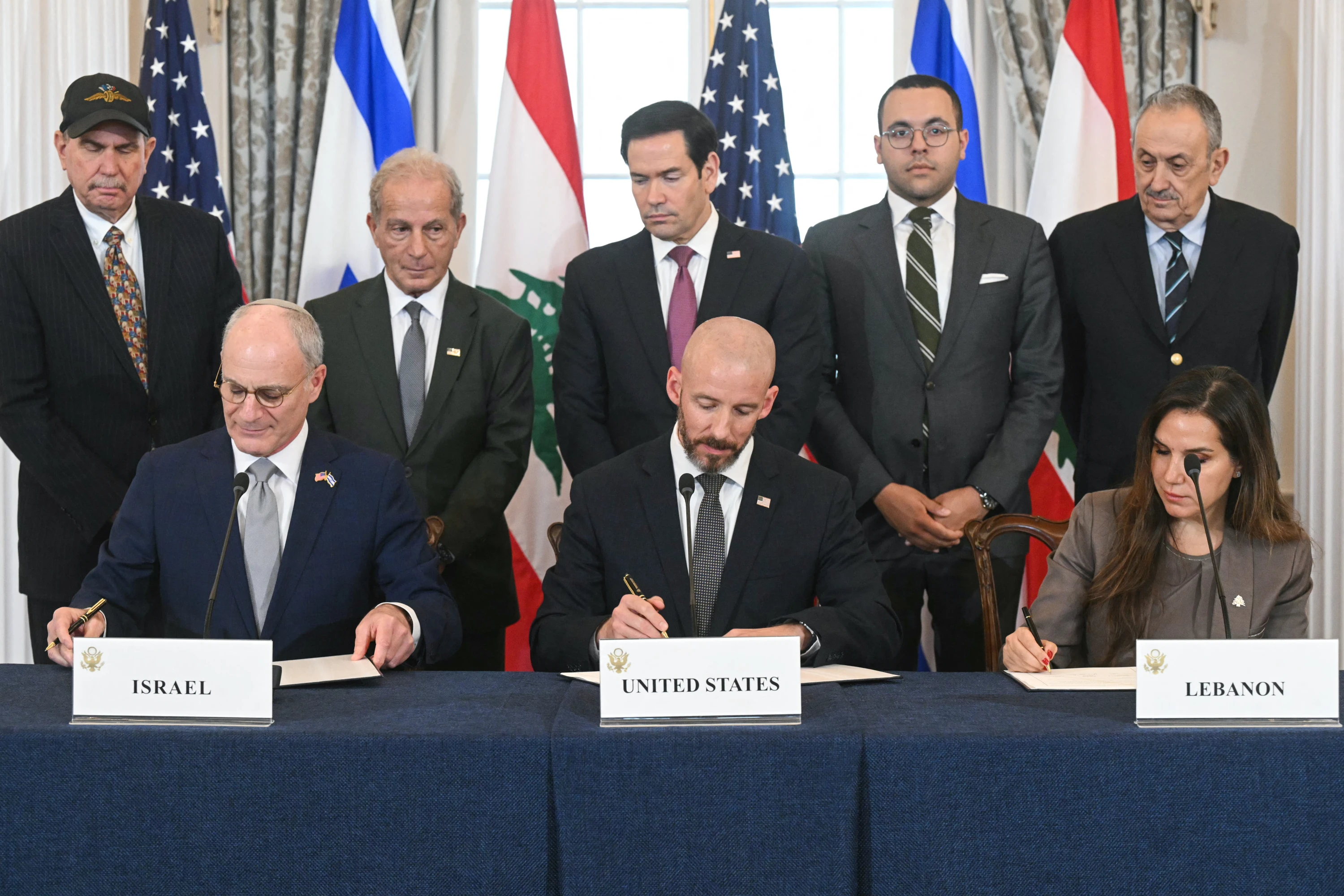
ERBIL, Kurdistan Region of Iraq - Israel and Lebanon signed a framework agreement on Friday in a US-mediated breakthrough that officials say could pave the way toward lasting peace between the neighboring countries. US Secretary of State Marco Rubio, who attended the signing ceremony, described the moment as "the beginning of the beginning," while cautioning that "there's a lot of work...
ERBIL, Kurdistan Region of Iraq – The Iraqi Bar Association issued a firm statement on Sunday declaring its full support for Prime Minister Ali al‑Zaidi’s sweeping anti‑corruption campaign, while making it clear that it will not provide legal defence to any individuals charged with corruption. The move comes as at least 47 senior politicians and lawmakers have been detained in...

CARACAS, Venezuela – Five days after twin earthquakes devastated large parts of Venezuela, rescue teams are still fighting against time to find survivors, with tens of thousands of people remaining unaccounted for. The official death toll has surpassed 1,400, and fears are mounting that the number will rise sharply as search operations continue in collapsed buildings and landslides...

By Picrz.com | June 28, 2026 ERBIL, Kurdistan Region of Iraq – Iraqi security forces arrested several politicians and lawmakers in a predawn raid on Baghdad’s heavily fortified Green Zone on Sunday, in connection with a sprawling corruption case involving more than $85 million embezzled from the Oil Ministry, state media reported. The operation, which took place in...