


Supreme Court Overturns Humphrey's Executor, Strikes FTC Removal Protections – Trump v. Slaughter
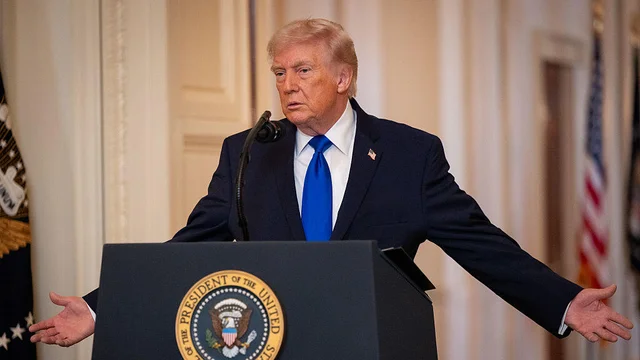
WASHINGTON – The Supreme Court ruled Monday that removal protections for members of the Federal Trade Commission are unconstitutional, overturning a 90-year-old precedent and significantly expanding the president's authority over independent federal agencies.
In a landmark 6-3 decision in Trump v. Slaughter, the conservative majority struck down a 1935 ruling known as Humphrey's Executor v. United States, which had allowed Congress to shield members of multi-member independent agencies from being fired by the president without cause.
Chief Justice John Roberts authored the majority opinion, joined by the court's five other conservative justices. The three liberal justices dissented, with Justice Sonia Sotomayor reading a summary of her dissent from the bench – a rare occurrence signaling profound disagreement.
Roberts: President Must Control Those Who Exercise His Power
Writing for the majority, Roberts emphasized that limits on the president's ability to remove those who wield executive power infringe on his constitutional authority.
"Although it is up to the Senate to decide whether to confirm those with whom the President would prefer to work, neither Congress nor the courts may saddle him with those with whom he cannot work," Roberts wrote. "Subordinates who exercise the President's power are subject to removal by him. Then, and only then, can they remain accountable to the President, and the President to the people."
The ruling reverses a decades-old legal framework that had protected commissioners of independent agencies from political pressure, allowing them to be removed only for "inefficiency, neglect of duty, or malfeasance in office."
Sotomayor's Sharp Dissent
In a dissenting opinion joined by Justices Elena Kagan and Ketanji Brown Jackson, Sotomayor warned that the decision would fundamentally reshape the structure of the federal government.
"Put simply, today the majority reshapes our Government. Dozens of independent commissions are now likely to become purely executive agencies, shifting tremendous power over broad swaths of American life into the President's hands," she wrote.
The dissent argued that Congress had designed independent agencies to operate free from political interference, ensuring that expert decision-making – rather than partisan loyalty – guided their work.
The Slaughter Case: A Test of Executive Power
The case arose from President Trump's decision to fire Rebecca Slaughter, a Democratic FTC commissioner, without cause in March 2025. Slaughter had been initially appointed to the FTC during Trump's first term and reappointed by President Joe Biden.
Slaughter was informed that her service was "inconsistent" with the Trump administration's priorities and removed from her post. She filed a lawsuit challenging her removal, arguing that Trump's action violated the 1914 law establishing the FTC, which stipulated that commissioners could only be removed for cause.
A federal district court ruled in Slaughter's favor and ordered her reinstatement. The U.S. Court of Appeals for the D.C. Circuit agreed, allowing her to continue in her role. However, last September, the Supreme Court permitted Trump to fire her while it considered the legality of removal protections for FTC members.
Broader Implications
The decision extends beyond the FTC. Congress has created more than two dozen multi-member agencies led by officials who can be removed by the president only for cause – including the National Labor Relations Board, the Consumer Product Safety Commission, and the Federal Communications Commission.
The ruling is the culmination of a years-long effort by conservative legal advocates to weaken the New Deal-era precedent. In 2020, the Supreme Court invalidated removal protections for the director of the Consumer Financial Protection Bureau, and in 2021, it struck down similar protections for the head of the Federal Housing Finance Agency.
Fed Board Members Spared (For Now)
The high court has so far spared two other officials from removal while litigation continues: Lisa Cook, a member of the Federal Reserve's Board of Governors, and Shira Perlmutter, the register of copyrights.
In January, the justices heard arguments on whether to allow Trump to fire Cook from the Fed Board. In a separate opinion authored by Roberts, the court rejected Trump's attempt to remove Cook while the challenge to her dismissal moves forward, noting that the Fed is a "uniquely structured, quasi-private entity that follows in the distinct historical tradition of the First and Second Banks."
Expert Analysis
"This is a seismic shift in the balance of power between the executive branch and independent agencies," said Sarah Binder, a political science professor at George Washington University. "The majority's ruling essentially ends the 90-year experiment with multi-member independent commissions as Congress envisioned them. These agencies will now operate under the direct control of the president, which fundamentally changes their mandate and decision-making."
However, supporters of the ruling argue it restores democratic accountability. "Independent agencies have become unelected bureaucracies operating beyond presidential control," said John Yoo, a law professor at the University of California, Berkeley. "This ruling ensures that the president – who is accountable to the voters – can direct the policies of the federal government."
What's Next
The ruling will likely trigger a wave of litigation as other independent agency officials challenge their removal protections. Congress may also consider legislation to redefine the status of independent agencies, though any such effort would face an uncertain future given the court's strong stance.
For now, the decision represents a major victory for presidential power and a significant setback for the administrative state as it has existed since the New Deal.
Reported by Picrz.com News Desk
Editorial Team: Picrz Editors
Published: June 29, 2026
Categorie
Leggi tutto
ERBIL, Kurdistan Region of Iraq – The Iraqi Bar Association issued a firm statement on Sunday declaring its full support for Prime Minister Ali al‑Zaidi’s sweeping anti‑corruption campaign, while making it clear that it will not provide legal defence to any individuals charged with corruption. The move comes as at least 47 senior politicians and lawmakers have been detained in...

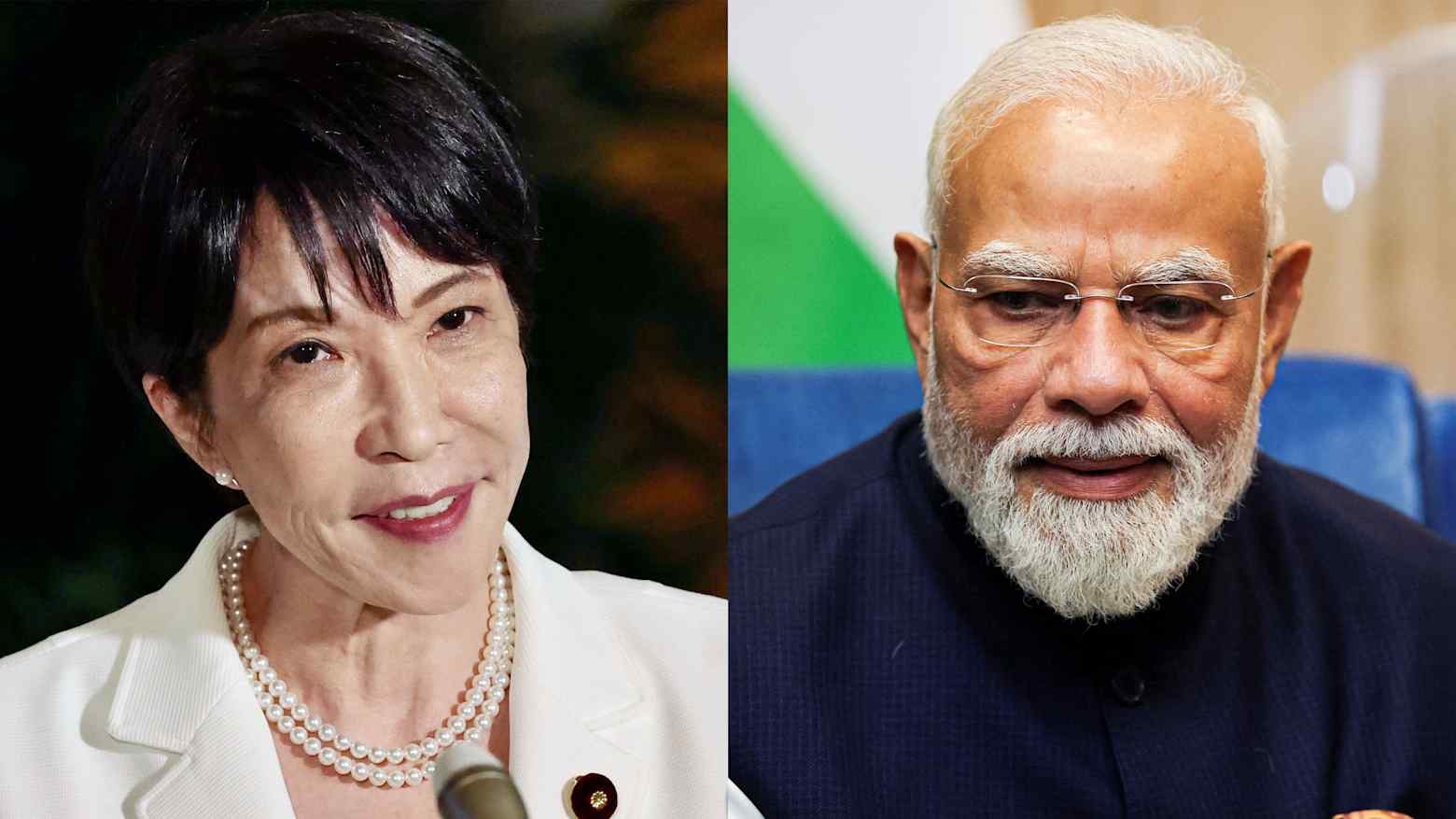
Japanese Prime Minister Sanae Takaichi will embark on her first visit to India since taking office last year, accompanied by more than 50 major companies. The trip headlines a busy week in Asia that also sees a verdict in the high-profile corruption trial of former Indonesian Education Minister Nadiem Makarim, South Korea unveiling massive semiconductor projects, and Japan simultaneously...
By Picrz.com | June 28, 2026 ERBIL, Kurdistan Region of Iraq – Iraqi security forces arrested several politicians and lawmakers in a predawn raid on Baghdad’s heavily fortified Green Zone on Sunday, in connection with a sprawling corruption case involving more than $85 million embezzled from the Oil Ministry, state media reported. The operation, which took place in...

Olivia Wilde打破沉默:否认与Florence Pugh片场"激烈争吵"传闻 Olivia Wilde Breaks Silence: Denies "Screaming Match" with Florence Pugh 曾因电影《亲爱的别担心》宣传期深陷舆论漩涡的Olivia Wilde,如今终于打破沉默,正面回应了当年与主演Florence Pugh不和的传闻。在周三(6月24日)发布的《The Cut》专访中,这位演员兼导演坚决否认了片场发生"激烈争吵"的指控,并透露当时自己曾被要求对一切流言保持缄默。 *Olivia Wilde is finally setting the record straight about the swirling rumors that plagued the press tour for* Don't Worry Darling....

DUBAI, UAE — Picrz News — Iraq’s oil ministry said Friday (June 26) that Prime Minister Ali al-Zaidi “did not raise the issue of Iraq withdrawing from OPEC,” stressing that any demands related to production quotas are handled through OPEC’s technical and consensus-based mechanisms. The clarification follows comments Zaidi made on Thursday, when he said Iraq...