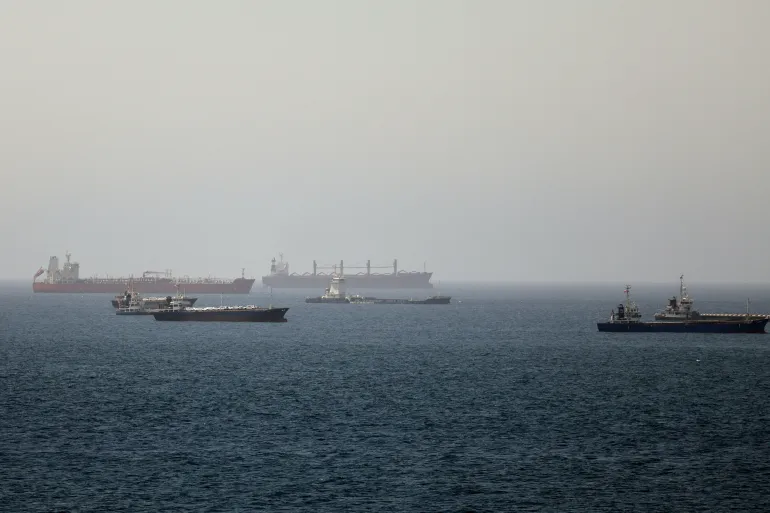
Maritime traffic through the Strait of Hormuz has dropped sharply following Tehran’s announcement that it has once again sealed the strategic waterway, citing Israel’s strikes on Lebanon. Ship tracking data reveals a sudden and significant disruption to one of the world’s most critical oil transit points.According to an analysis released Sunday by maritime intelligence firm Windward, only 12 vessels completed a strait crossing on the day, a steep decline from 35 transits recorded just 24 hours earlier.Of the eight ships observed entering the strait, five were operating with their Automatic Identification Systems (AIS) switched off, raising further concerns over navigational transparency.“The current traffic profile: dark, sanctioned, Iranian-linked — mirroring the late-blockade baseline rather than a functioning open strait,” Windward stated in a post on X.The sudden downturn comes despite tentative signs of recovery earlier in the week. On Wednesday, U.S. President Donald Trump and Iranian President Masoud Pezeshkian signed a memorandum of understanding aimed at ending the U.S.-Israel war on Iran, briefly lifting hopes for sustained maritime stability in the region.Recommended StoriesMourners gather to remember Lebanese conservationist killed by IsraelWhat are the end goals of Iran-U.S. negotiations?Ten-man Belgium hold off Iran in hard-fought World Cup drawFootball fans in Gaza gather to watch Spain-Saudi Arabia match
Maritime traffic through the Strait of Hormuz has dropped sharply following Tehran’s announcement that it has once again sealed the strategic waterway, citing Israel’s strikes on Lebanon. Ship tracking data reveals a sudden and significant disruption to one of the world’s most critical oil transit points.According to an analysis released Sunday by maritime intelligence firm Windward, only 12 vessels completed a strait crossing on the day, a steep decline from 35 transits recorded just 24 hours earlier.Of the eight ships observed entering the strait, five were operating with their Automatic Identification Systems (AIS) switched off, raising further concerns over navigational transparency.“The current traffic profile: dark, sanctioned, Iranian-linked — mirroring the late-blockade baseline rather than a functioning open strait,” Windward stated in a post on X.The sudden downturn comes despite tentative signs of recovery earlier in the week. On Wednesday, U.S. President Donald Trump and Iranian President Masoud Pezeshkian signed a memorandum of understanding aimed at ending the U.S.-Israel war on Iran, briefly lifting hopes for sustained maritime stability in the region.Recommended StoriesMourners gather to remember Lebanese conservationist killed by IsraelWhat are the end goals of Iran-U.S. negotiations?Ten-man Belgium hold off Iran in hard-fought World Cup drawFootball fans in Gaza gather to watch Spain-Saudi Arabia match